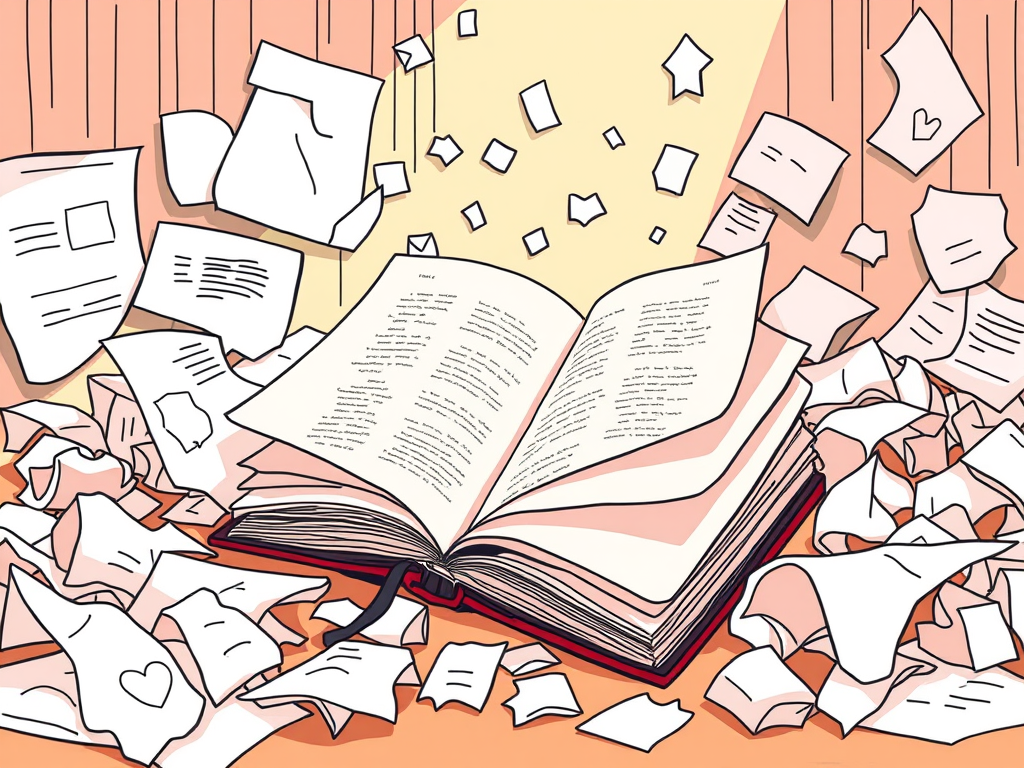
If you’ve got ideas, you can write a book. Even if you don’t see yourself as a writer, yet.
People often tell me, “I have ideas, but I’m not good with words. Can I still write a book?”
The answer is yes. But not in the way you might think.
You don’t have to be a “writer” in the literary sense to write a book. You don’t need to have loved essays in school or majored in English. You don’t even need to enjoy writing.
What you need is clarity about your message and a willingness to shape it with care.
I’ve been writing since college, 2008 to be precise, and here’s what I’ve learned: you can absolutely write your first draft on your own, it’s going to be messy, raw, full of false starts and half-baked metaphors, and that’s a good thing; I still write messy first drafts.
But you still need help to turn it into a real book. And yes, that applies whether you write it yourself or work with a ghostwriter.
Because here’s the truth: a book is not just a long article or a strung-together series of blog posts. A book is structured thought. It needs a spine. A voice. A focus. And above all, it requires a reader-centered point of view.
The Biggest Myth About Book Writing
We’ve been sold this idea that writing a book requires some magical gift.
It doesn’t.
It requires a strong message and a solid process. Writing talent can help, sure, but it isn’t the deciding factor. The deciding factor is: can you help someone through your words? Can you teach, shift, clarify, provoke?
Most bestselling nonfiction authors weren’t “writers” first. They were thinkers, teachers, researchers, founders, or coaches.
Stephen Covey, for example, didn’t start with a background in writing. He was a business professor and leadership consultant. The 7 Habits of Highly Effective People became a classic not because of its style, but because it simplified timeless principles into digestible, human ideas. The writing wasn’t poetic. It was useful.
Same with The 4-Hour Workweek. Tim Ferriss didn’t consider himself a writer either. His book was built like a product. He tested the title using Google Ads. He collected content through experiments. The book became a global phenomenon because it permitted people to think differently about time and work, not because it had an elegant sentence structure.
You don’t need to write to impress. You need to write to connect.
Ideas Matter More Than Grammar
Grammar is important. But ideas are essential.
Grammar can be cleaned up. An editor can fix a clunky sentence. A proofreader can catch that missing comma. But no editor in the world can inject life into a flat message.
Brené Brown started her writing journey in academia. She was a data person. Her early work read like most peer-reviewed papers, dry and heavy. But when she began letting her voice through, she found the magic. Her tone got warmer. Her vulnerability came out. The Gifts of Imperfection didn’t sound like a scholar. It sounded like a smart friend who’d done the work and was willing to share it.
That’s your edge.
You don’t need perfect grammar. You need the courage to show up as yourself and say something real.
So if grammar is the reason you are holding back, let that go. That’s what editors are for.
Tools and Coaches Can Fill the Gaps
Now let’s get to the messy middle where most non-writers quit.
You’ve got a Google Doc. Maybe a bunch of voice notes. A 12,000-word brain dump that jumps from story to strategy to side rant. You are not sure if you are writing a book or venting into the void.
This is where most people stop. Not because they don’t have something to say, but because they don’t know what to do next. Being a Book Coach, I get that. It’s not because your writing is bad (it could be though), but because you got deviated and confused.
And this is where tools and expert support matter.
Yes, you can use writing tools like Otter for transcriptions, or Grammarly or ProwritingAid to simplify your sentences. Yes, you can dictate your thoughts instead of typing them. Yes, AI can help brainstorm. But at some point, you will need a real person to help you shape your work into a coherent experience. And trust me on this, AI goofs up a lot when you dump your idea and simply ask it to write. Not a good idea to gain an AUTHORity.
Even if you work with a ghostwriter, you still need an editor. Or three.
Writing a book involves multiple levels of editing:
- Developmental editing to fix structure and flow
- Line editing to improve clarity and tone
- Proofreading to catch final errors
Whether you write the book yourself or get help with the heavy lifting, it still needs refinement. Think of your draft like raw clay. Only with expert hands does it become something ready for the shelf.
So no, I’m not against ghostwriting. I’ve seen it help busy coaches bring their message to life. But don’t assume it’s one-and-done. Ghostwritten or not, a book needs to be sculpted to feel like more than just long-form content.
Your Unique Voice Is Your Edge
Here’s something else most first-time authors forget: your voice is valuable because it’s not polished.
The more “non-writer” you sound, the more you actually sound like a real human being.
I’ve coached clients who were terrified to write because they thought they’d sound unprofessional. The irony? Their raw, unfiltered writing was often more powerful than they realized. Once we shaped it according to the decided narrative, cut the rambling, and found the rhythm, their personality came through. That’s what people connect with.
No one wants to read a coaching or any book that sounds like it was written by a robot. People want realness. They want someone who understands their pain, their confusion, and their hopes. If you’ve ever coached someone through a breakthrough, then you already know how to speak with empathy and clarity. That’s what makes a great nonfiction voice.
So if you are not a “writer,” good. Don’t try to fake it. Just be yourself, only tighter, clearer, and a little more structured.
And that’s where expert support comes in. Not to replace your voice, but to help it land.
You Don’t Need to Be a Writer. You Need to Be a Guide.
Let’s say it plainly: writing a nonfiction book is not about being literary.
It’s about being clear and helpful.
You are not writing a novel. You might be writing a roadmap through a non-fiction. If your book walks your reader from confusion to clarity, you’ve done your job. Whether it’s 10,000 words or 50,000 doesn’t matter as much as whether the reader feels seen, understood, and empowered to act.
The best books don’t lecture. They guide.
They say, “I’ve been where you are. Here’s what I’ve learned. Let me show you the way.”
If you can do that in a coaching session, you can do it in a book.
My Experience: From Writing to Coaching Writers
I’ve been writing since college, so yes, I came into this world with a bit of a head start. But I can tell you, knowing how to write and knowing how to write a book are two different things.
When I wrote my first manuscript, I had the same doubts most people do. Is this clear? Is it helpful? Am I just repeating myself? I went through three rounds of editing — developmental, line, and final polish — before I felt confident putting it out into the world.
And I’m glad I did. Because the difference between “content” and “a book” is the thoughtfulness behind it.
Now I help coaches, entrepreneurs and anyone who wants to write a book do the same. Most of them don’t identify as writers. But they know how to help people, and that’s where we begin.
With a message worth shaping.
So if you’ve got ideas, don’t talk yourself out of writing. Start messy. Start real. And know that there’s help available when you’re ready to take it further.
You don’t have to wait until you feel ready. You don’t need to be “a writer.” You just need to take the first step.
If you’re sitting on a message that could help people, stop waiting. Start writing.
And when you’re ready to shape it into something real, I can help.
→ Ready to build your book the right way? Let’s talk.
FAQs
Can someone write my book for me?
Yes. Ghostwriters can turn your ideas into a manuscript. But don’t stop there. You’ll still need editing — developmental, line, and proofreading — to make sure your voice shines and your message hits home.
Should I take a book writing course?
If you prefer structure and accountability, a course can help. But it’s not required. One-on-one coaching or a proven framework might give you more tailored support.
What age is too late to start writing?
There’s no such thing. Some of my mentees are as young as 6 years olds and some are 62. You are not late. You are not before time. If you have an idea. you are just ready now.
Is it possible to write a book with no experience?
Absolutely. Many first-time authors are non-writers. With the right topic, support, and process, you can write a book that works.
Can I write a book if I’m bad at writing?
Yes. Your ideas are more important than your syntax. The writing can be edited. The message is what matters.
Is 25 too late to become a writer?
Not even close. You’re still early in the game. But writing isn’t about age as I said before, it’s about having something to say. So don’t wait.
Leave a Reply